Guides & Tips
Screen vs Dimout vs Blackout: Understand the Difference Before Ordering Office Blinds
Three words confuse more buyers than anything else: screen, dimout, blackout. So often that we now ask every customer one question first: “What is the room actually used for?” The answer determines the right fabric – and prevents money spent on a fabric with the wrong function. Here is the plain-language version we use with office managers, interior vendors and building teams across Jakarta and Jabodetabek.
Not sure which to choose?
Describe your room function on WhatsApp and we send a fabric recommendation plus physical samples to test.
Ask for a RecommendationTable of Contents
1. Screen fabric – see outside, hold the glare
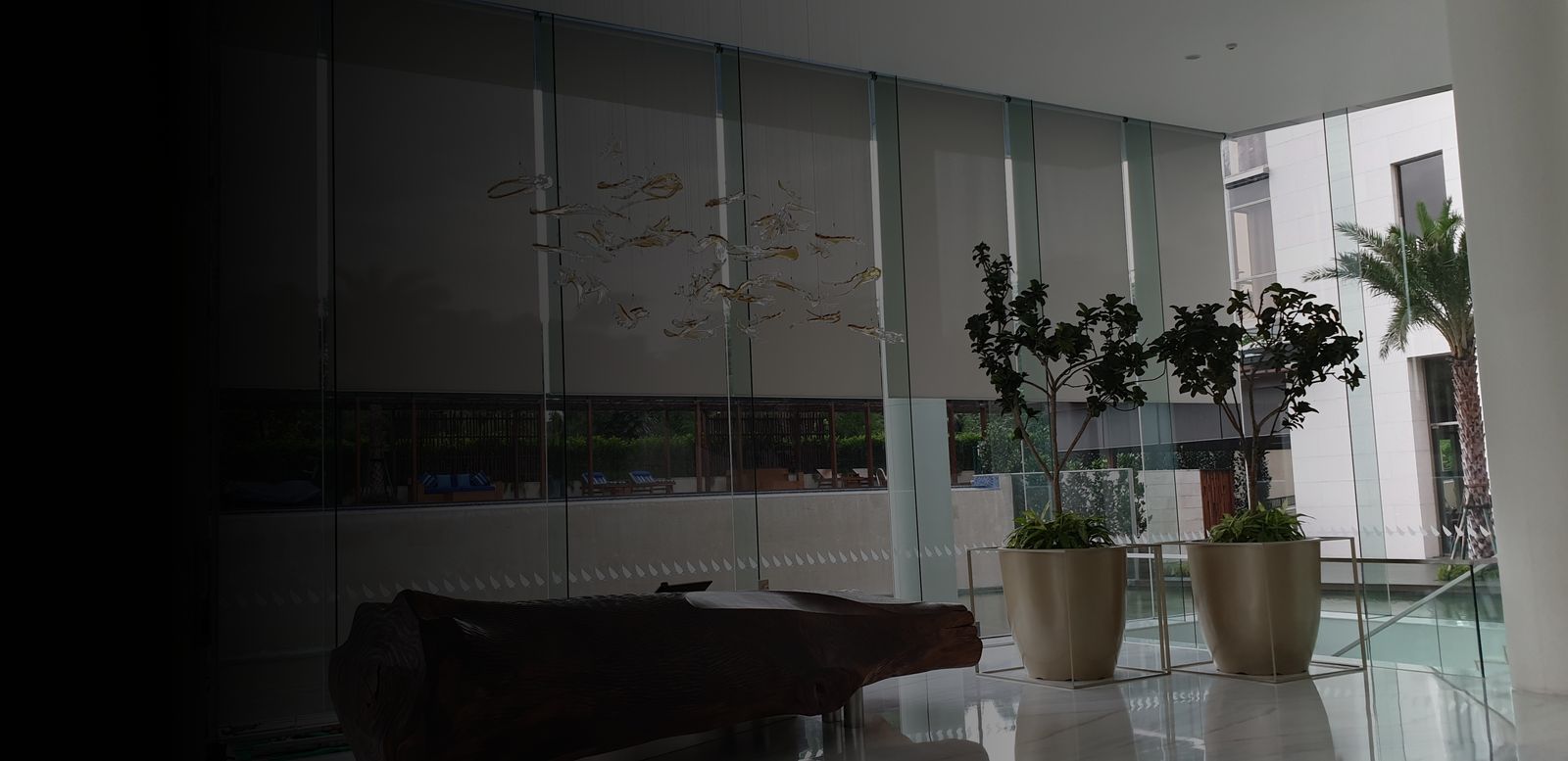
Screen is a fine mesh that blocks a share of glare and heat while keeping the view of the outside. Think of it as sunglasses for the window: the room stays cooler, yet the city view remains. It suits working floors facing east or west, glass facades, and any space that wants brightness without glare. Screen is the first choice for most Jakarta office roller blinds.
2. Dimout fabric – privacy with soft light
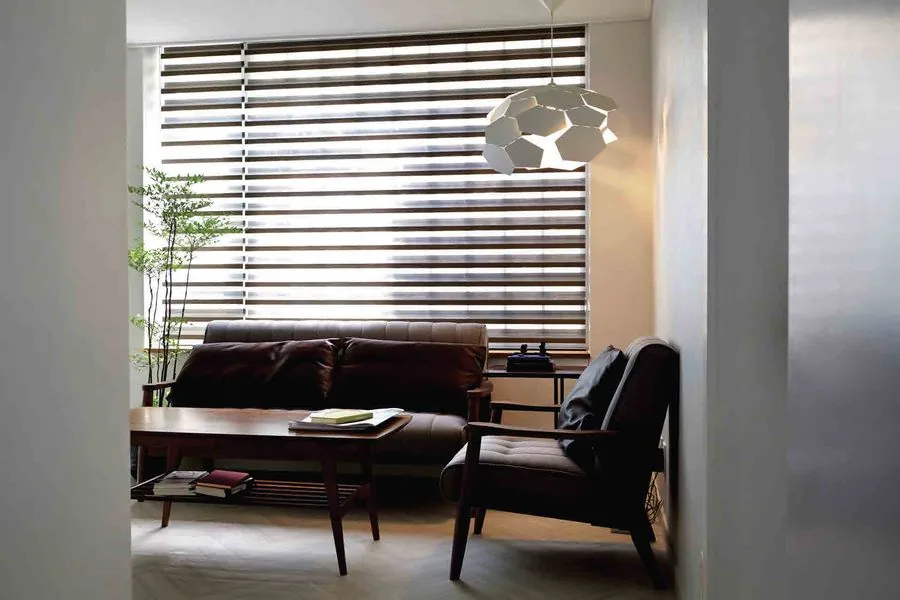
Dimout reduces daylight by roughly 70-80%. From outside the room is no longer clearly visible; from inside, the daylight feels warm and soft. It fits executive rooms, waiting areas, and informal meeting spaces.
3. Blackout fabric – total darkness when needed
Blackout is engineered to block almost all light. In an office, blackout is mandatory for projector meeting rooms, presentation rooms, and rest areas. At home it is the favourite for bedrooms and home theatres.
4. Full comparison table
| Aspect | Screen | Dimout | Blackout |
|---|---|---|---|
| View outside | Visible | Blurred | Not visible |
| Daytime privacy | Low | Medium-high | Total |
| Heat and glare control | High | Medium | High |
| Room darkness | None | Dimmed | Almost total |
| Best for | Working floors, facades | Executive rooms, waiting areas | Meetings, presentations, resting |
All three are available in many colours and grammages. Our own fabric is produced up to 2.8 meters wide without seams.
5. Combinations and special needs
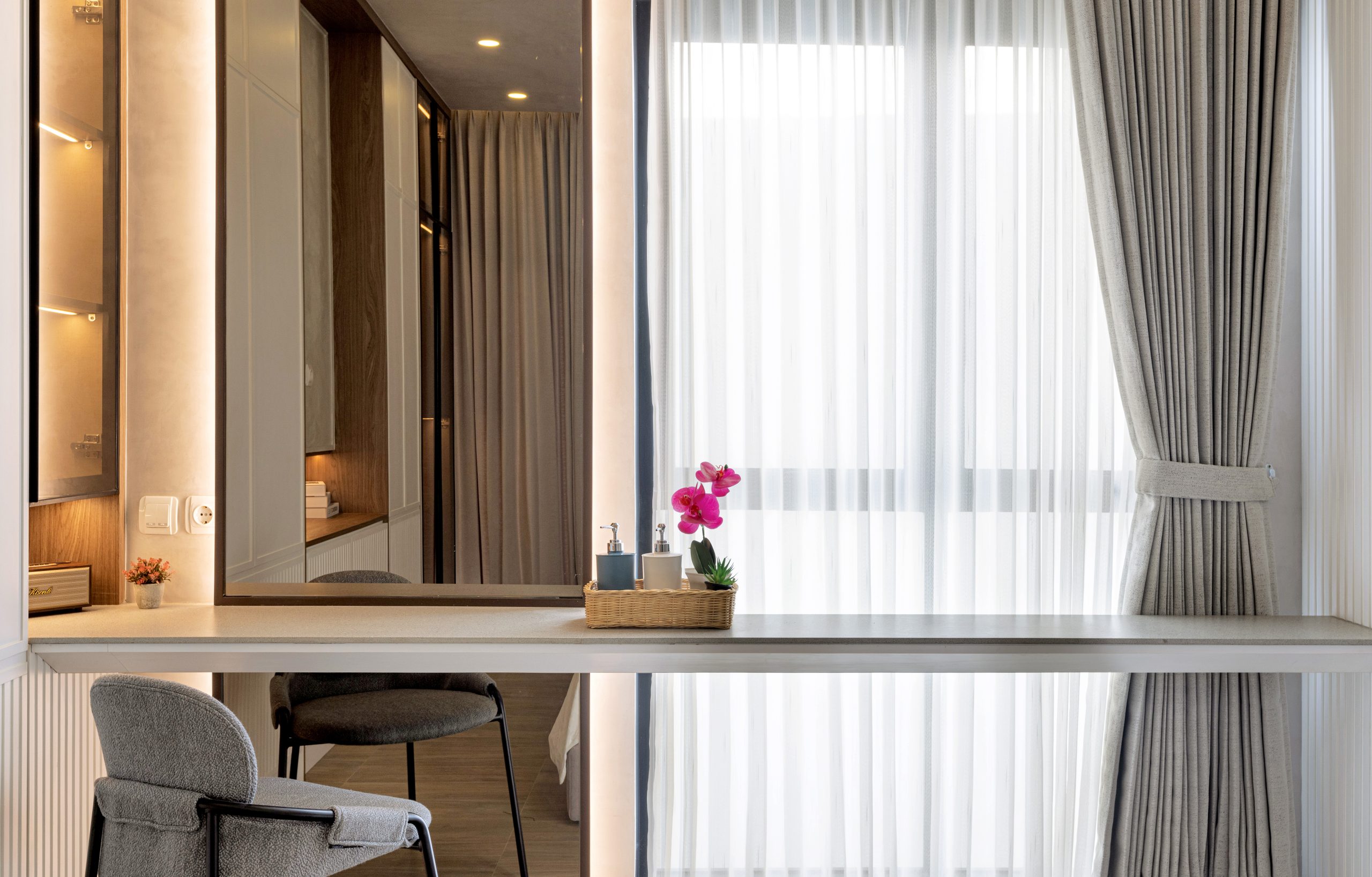
Need two functions on one window? We install a double roller: screen for daytime, blackout for night, on a single bracket. For hard-to-reach windows, pair them with a motorized system. For a decorative layering look, see our interior curtain range.
Non-standard windows such as skylights or triangles? We regularly produce custom printed and skylight solutions. And if heat is your bigger problem, read how screen blinds solve hot, glaring offices.
A quick decision guide by room. Reception and lobby: screen or solar fabric keeps the welcome bright without turning the space into an oven. Open-plan working area: screen for the east-west windows, dimout near screens that need reduced contrast. Meeting rooms: blackout if the projector is used daily, otherwise dimout plus blackout on a double roller. Executive offices: dimout for daytime privacy, blackout if the room doubles as a rest or family area at home. Bedrooms and home theatres: blackout without debate. This mapping is not a rule we invented – it is the feedback our fitters collect room by room on every installation we complete in Jakarta and Jabodetabek, and it almost always leads to a “why did no one explain it this simply” reaction.
One tip from the workshop: order a small swatch set of the three fabrics before committing to a full order. Light behaves differently at 09.00 and 15.00, so test the swatch in the actual room at both times. What looks like a soft screen in the catalogue can feel too transparent next to a wall painted white, while a blackout can make a small meeting room feel heavy. Swatches cost a few minutes of patience and save the cost of re-shipping an entire floor – and they turn an abstract comparison into a decision you can trust. Book a sample visit if you can, and decide with the sun in the actual room – not from a screen.