Guides & Tips
Energy Efficient Office Blinds: Cut the Heat and Lower Your AC Bills
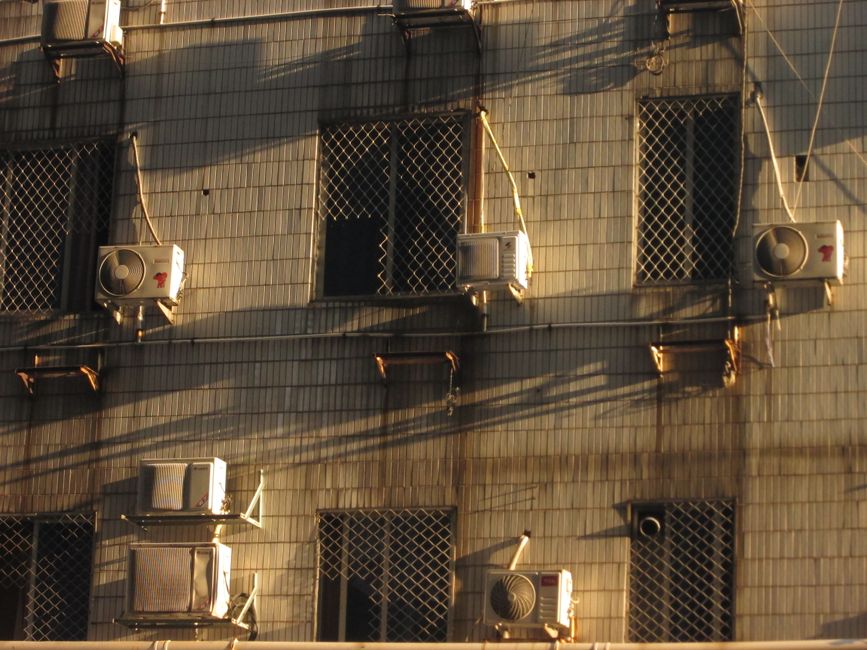
In Jakarta the afternoon sun is not a lighting problem, it is a cooling bill. Heat pours through glass, the room climbs past the thermostat set point, and the air conditioner works harder all afternoon. Energy efficient office blinds attack the cause at the glass, not the symptom at the compressor – and as a fabricator we can show you exactly how the fabric, the mount position and the motor matter for the number on your utility invoice.
Cooler rooms, lower AC load
Tell us your facade and window sizes – we recommend the right screen, dimout or exterior system for your floor.
Get Heat-Load AdviceTable of Contents
1. Why heat enters through glass and burdens your AC
Glass is the weakest link in a building envelope. Direct sunlight carries intense infrared radiation, and single glazing common in older Jakarta towers lets most of it through. Only part of that heat warms the air directly – the rest is absorbed by desks, floors and partitions, which then re-radiate it for hours after the sun moves. That is why a room feels hot long after 5 pm.
Three factors decide how much heat your AC has to remove on a given floor:
- Window orientation – east facades cook in the morning, west facades in the afternoon.
- Glass area – a full-height glass wall is a heat collector, not just a view.
- Shading – anything that interrupts sunlight before or inside the glass reduces the heat gain.
Blinds sit at the last link in this chain, which makes them the cheapest lever a facility team can pull. If your floor runs warm on one side, start by mapping the facades and reading our guide on handling a hot, glaring office with screen blinds.
2. How screen fabric cuts glare and heat while keeping the view
Screen fabric is a mesh of PVC-coated threads that blocks a share of solar radiation while remaining see-through. A typical screen stops around 80-90 percent of light and a large slice of heat, yet you keep the street view and natural daylight. For workstation areas, that is usually the right trade.
When you need darker rooms – meeting rooms, AV rooms or projector lines – drop to dimout or blackout fabric. The rule from our cutting table: pick the lightest fabric that meets the glare requirement, because the more light you block, the more daylight you give up. For an honest comparison of the materials, see screen versus dimout versus blackout fabric.
A mounted screen also stops glare bouncing off monitors, which is why usability teams buy them even before the energy case. We cut both screen and dimout to the millimeter in our own workshop, with fabric widths up to 2.8 m for full picture windows.
3. Exterior blinds block heat before the glass
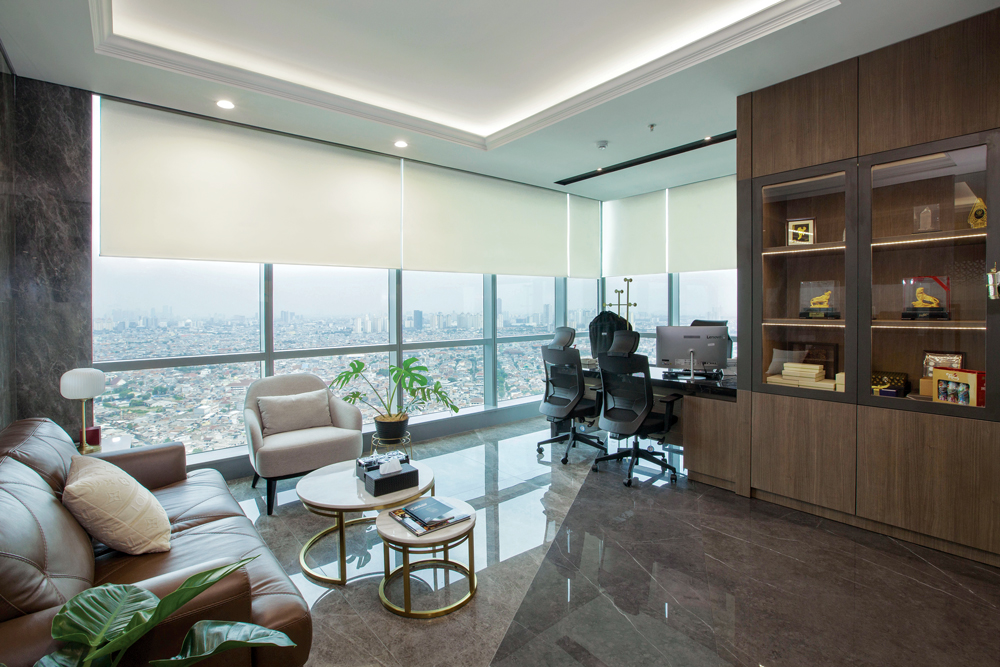
The most effective position is outside the glass. An exterior blind intercepts sunlight before it touches the glazing, so nearly all of the radiation stays out of the building. Interior blinds block light too, but part of the trapped heat is released into the room. Exterior systems are the standard answer for sun-facing towers, pergolas and glass facades.
Compared point by point:
- Interior screen – good glare control, some heat stays inside the glass cavity.
- Interior dimout – near-total darkness, the most convenient after-sales.
- Exterior blind – blocks heat before the pane, best energy outcome, needs sturdier hardware.
For a glass-heavy office the strongest result is often a combination: exterior blinds on the east and west facades plus interior screen inside, as shown on our exterior and screen blind product range.
4. Installation strategies that multiply the effect
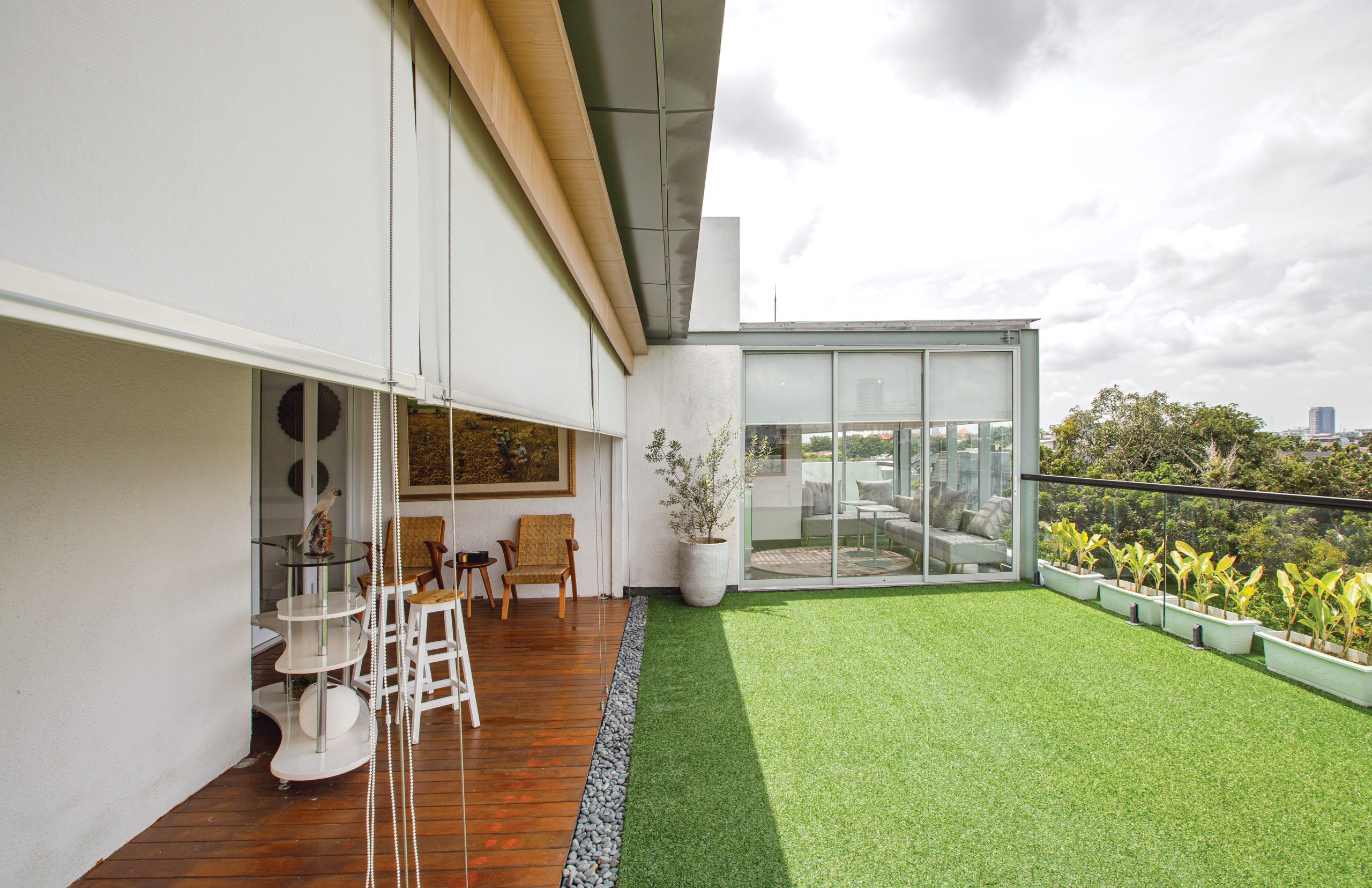
Hardware position matters as much as fabric choice. The four patterns we install most often for facility teams:
- East-west priority – shade the facades that face the morning and afternoon sun first; north-south glass can use lighter fabric.
- Side channels – fabric runs in guide tracks, so heat cannot creep past the edges and the blind stays taut under wind or AC drafts.
- Motorized scheduling – blinds lower automatically before peak solar hours and rise after, so savings do not depend on staff remembering.
- Tilt and drop angle – for louver and exterior types, angle the slats to bounce direct sun while keeping daylight and views.
Motor control also unlocks zoning: the east wing closes at 9 am, the west wing closes at 1 pm. For upgrading a whole tower floor, our motorized blinds for office buildings guide covers control options from remote and wall switch to smart home integration.
5. When the investment pays back
Energy efficient office blinds pay back through three channels, not just one:
- Lower AC runtime – less solar gain means the compressor cycles less during peak hours.
- Comfort and productivity – fewer glare complaints and a steadier temperature reduce hotspot rework and dimming requests.
- Protection – fabric and furniture fade slower when ultraviolet light is filtered.
A glass-heavy east or west floor is the fastest payback case; a north-facing interior room with small windows is the slowest. For budget planning, the total reinstatement behaves like any wholesale blinds project – dozens of windows in one zone earn the lower per-unit rate. And because we fabricate and install in-house, the payback calculation is simple: one quote, one team, one measured window list, ready from the first survey.
For overall product selection on your floor, our 7 tips for choosing office roller blinds and the home page on our office blinds work across Jakarta are good next steps before you specify.